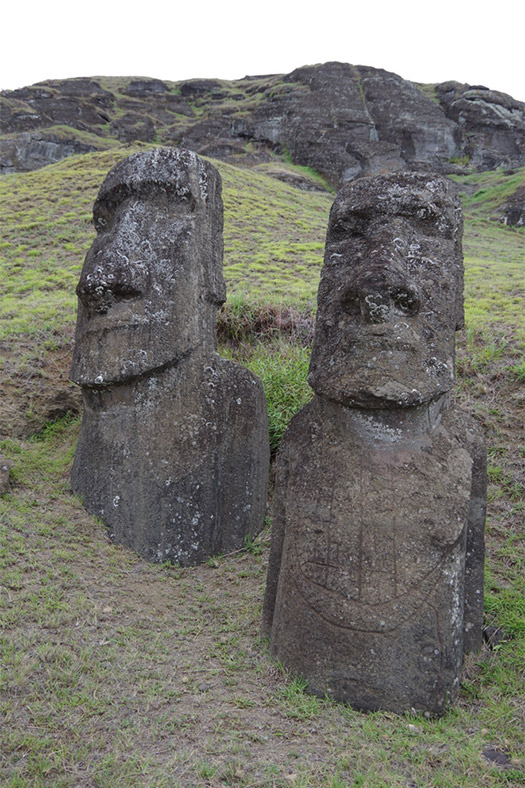
The mysteries of the moai

It seems we are drawn to remote places and Easter Island can certainly be called that. Located 3500 km off the coast of Chile, it is home to the world’s most remote airport and the mysterious moai statues. We spent a week here to wander about and learn as much as we could about these monolithic human figures.

They all fell down . . .

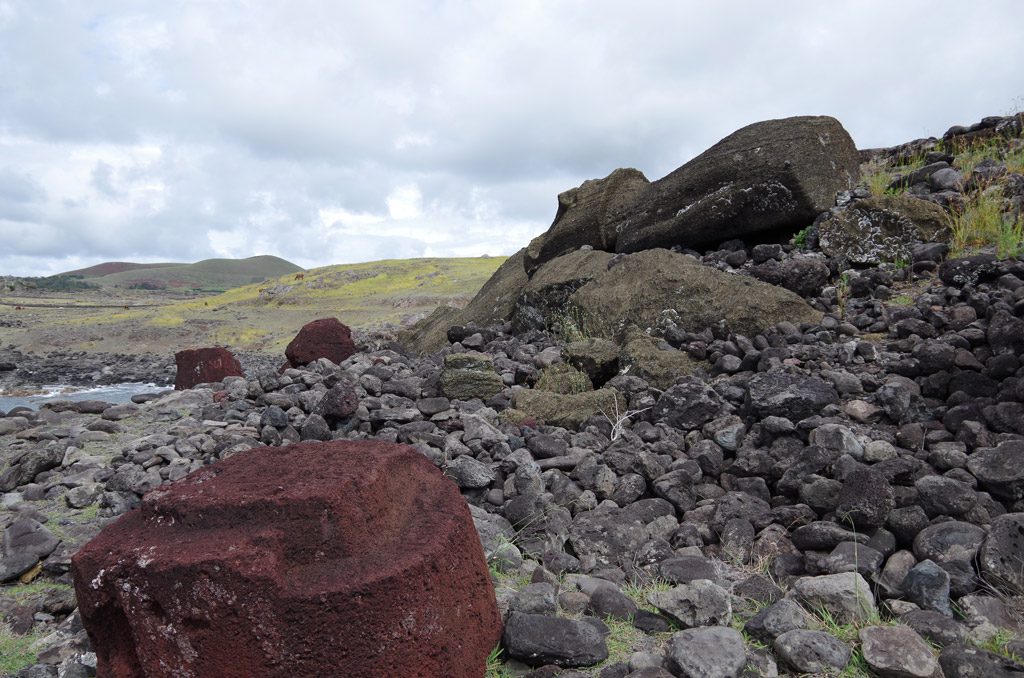
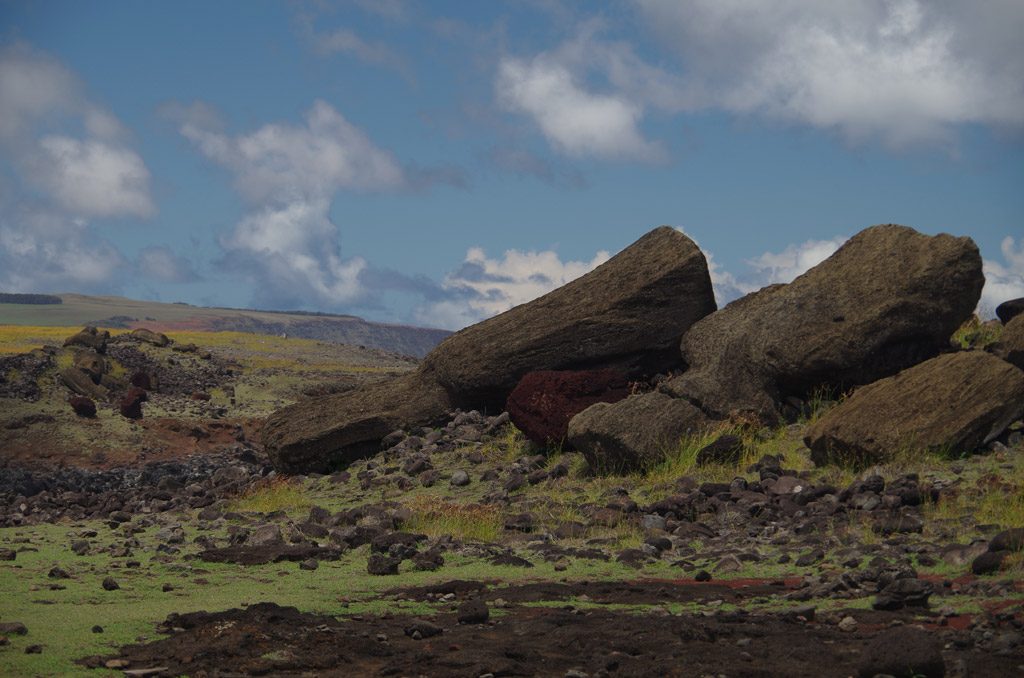
1838 was the last time an outside visitor documented seeing any of the statues standing. The islanders themselves are to blame for the destruction and there are two theories as to why.

When an important member of a tribe died, a statue was erected so their spiritual power, or mana, could protect their tribe and influence events long after their death.

Theory One:  As the natural resources on and around the island were depleted there was inter-tribal warfare and the statues were knocked down by opposing tribes to ensure they no longer held any power. They were almost always thrown forward so their faces and eyes were no longer visible and every attempt was made to break them at the neck.

Theory Two:  The islanders may have just lost faith in the power of the moai after seeing all their resources disappear year after year.

fallen_moai.jpg
face_down_moai
moai_head.jpg
moai_head_cow_backround.jpg
moai_on_rock_pile.jpg

Restored but still deteriorating

Efforts have been made by many different countries to restore some platforms (ahu) to their original condition. The wind and sea continue to erode the statues and those that were left face down are in better condition because of it. Ahu Akivi was the first platform to be excavated and restored in 1960.

ahu_akivi_moai.jpg

Ahu Tongariki

Perhaps the most famous, this platform was restored between 1992 and 1996 funded by the Japanese Government.
It is the largest with 15 standing moai and features the largest ceremonial structure in all of Polynesia. 
In 1960, a tsunami hit the island with Tongariki receiving the brunt of it. This scattered the already fallen moai causing considerable damage.
The moai on it’s back fell during transport and was never erected. 
The moai standing on its own is known as the ‘travelling moai’ having successfully left the island to tour Japan in 1982.

ahu_tongariki_allmoai.jpg
travelling_moai.jpg
tongariki_from_afar.jpg
rapa_nui_rock_art_turtle.jpg

Anakena & Ahu Nau Nau

The main beach and, according to oral legend, the landing place of Hotu Matu’a, a Polynesian chief who founded the first settlement.

anakena_beach.jpg
anakena_beach1.jpg
moai_back_carving.jpg

Ahu Tahai

Tahai is the only place you will find a moai restored with eyes. The original eyes were made of white coral with a pupil of red scoria stone. The museum houses the only authentic partial eye on the island and only a handful of others have ever been found.

moai_with_eyes.jpg

Remnants of a distinctive boat-shaped house can also be found here. These houses were reserved for the higher ranking villagers. 

rapa_nui_sunset1.jpg
moai_sunset.jpg

Rano Raraku

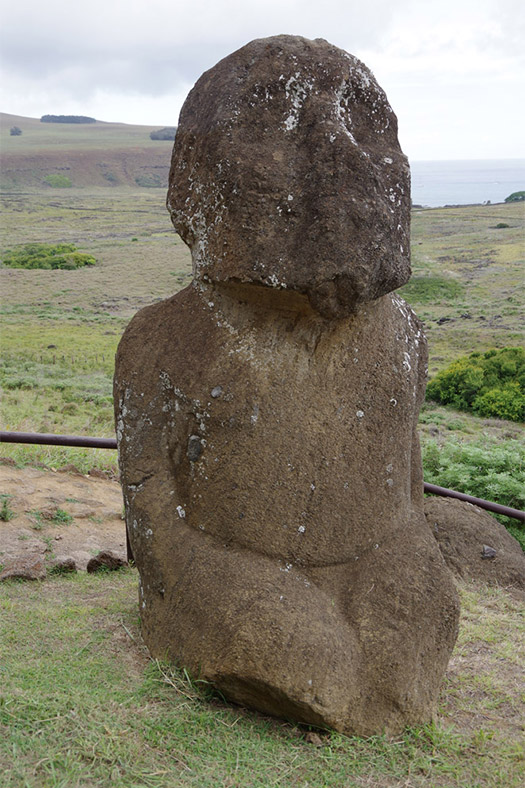
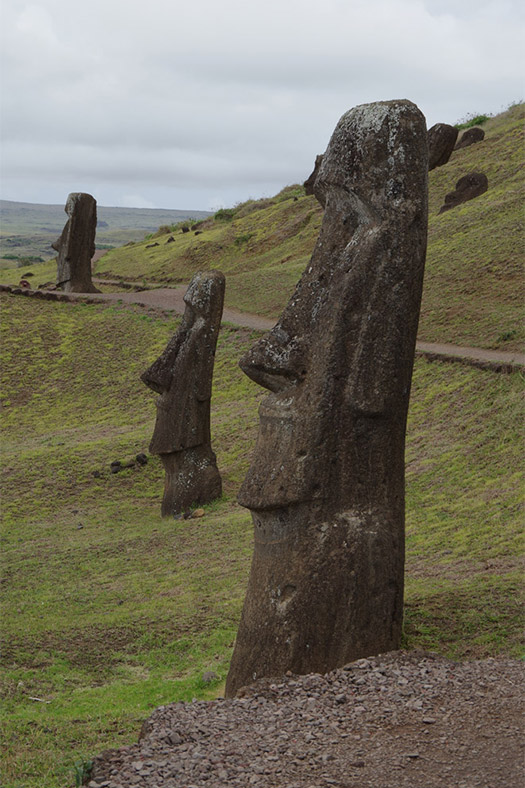
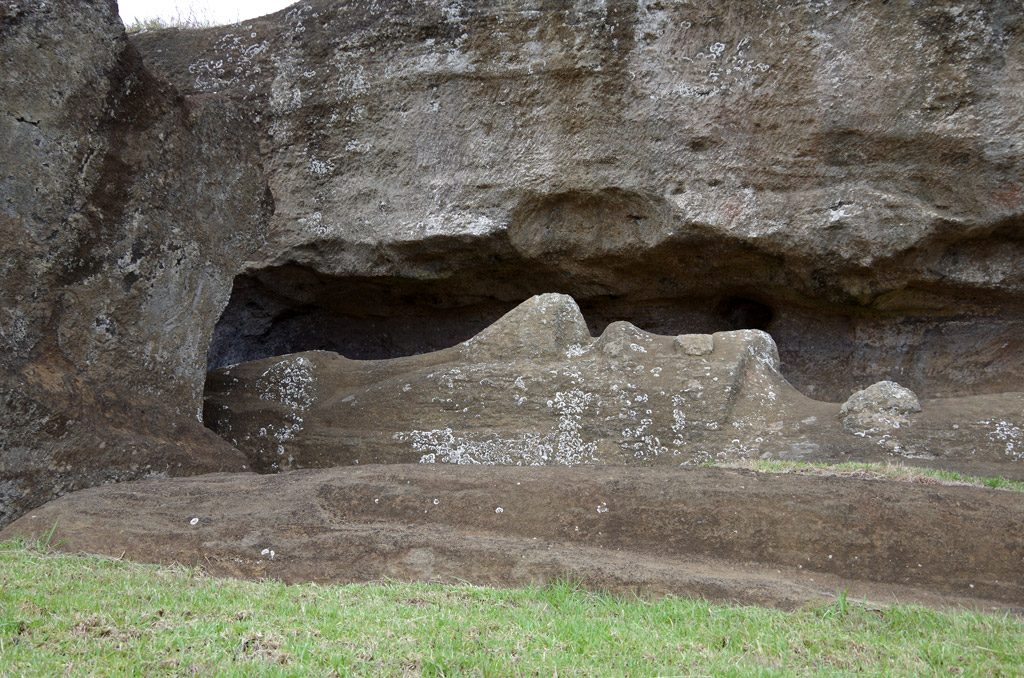
This is the quarry where the moai were carved and home to almost 400 left unfinished. The mysterious Tukuturi also resides here. He is the only kneeling moai and made from red scoria instead of the tuff (volcanic ash) found here.

quarry_moai_heads.jpg
kneeling_moai.jpg
moai_quarry.jpg
quarry_moai.jpg
moai_with_carved_ship.jpg
moai_and_sea.jpg
quarry_lake_rapa_nui.jpg

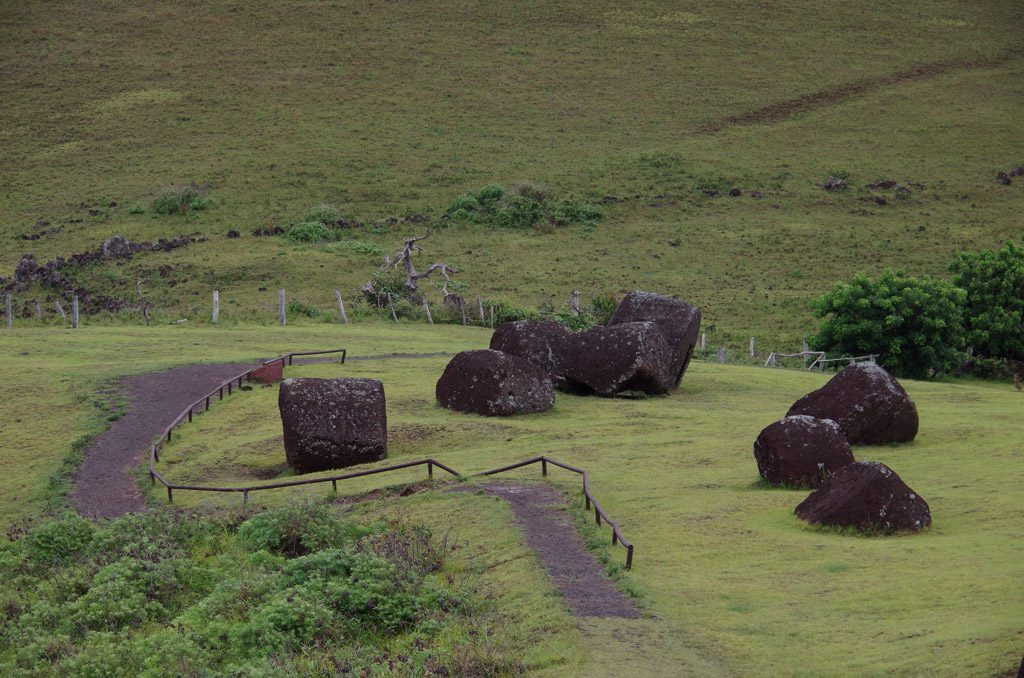
Puna Pau

This is the red scoria quarry where all of the pukao (topknots) were carved. There were only about one hundred topknots found, meaning they were a later addition to the statues.

Some believe they represented hats and others a hairstyle with long hair tied up in a bun.

easter_island_red_topknots.jpg
puno_pau_rapa_nui.jpg
easter_island_excavation.jpg

Caves

There are many caves (anas) throughout the island that were used as temporary shelters or permanent residences.

They were also used as hiding places during the slave raids of 1862 when the Peruvians came and forcibly removed up to 1500 Rapa Nui people, many of whom were chiefs and wise men. 

rapa_nui_cave_grass.jpg
rapa_nui_water_cave.jpg
easter_island_cave.jpg
rapa_nui_cave.jpg

Rano Kau

This massive crater lake is over 1 km in diameter and the surface is covered with mats of freshwater reeds. Interestingly, these are the same reeds that are found in Lake Titicaca in Peru. 

rano_kau_easter_island.jpg
rano_kau.jpg

Orongo

A ceremonial site used for the Birdman competition in which tribal chiefs would select one of their men to race down the cliffs, swim to the islet (motu) offshore and wait for the Sooty tern to lay its egg. The one who returned to Orongo with the egg intact would be declared the winner and his chief would be crowned Birdman to rule for the next year.

orongo_islets.jpg
orongo_houses.jpg
orongo_rock_art.jpg
orongo_house.jpg
orongo_rapa_nui.jpg

Most of the guided tours that go to Easter Island do it in 4 days or less. This is enough time to see everything and revisit places at different times of the day. It is worth seeing no matter how long you stay. 

Check out the full Chile photo gallery here or our mainland adventures here.

Santiago to Hanga Roa - Street art, big birds and one very remote island
Exploring Central America - Small Group Adventure Travel

Leave a Comment